


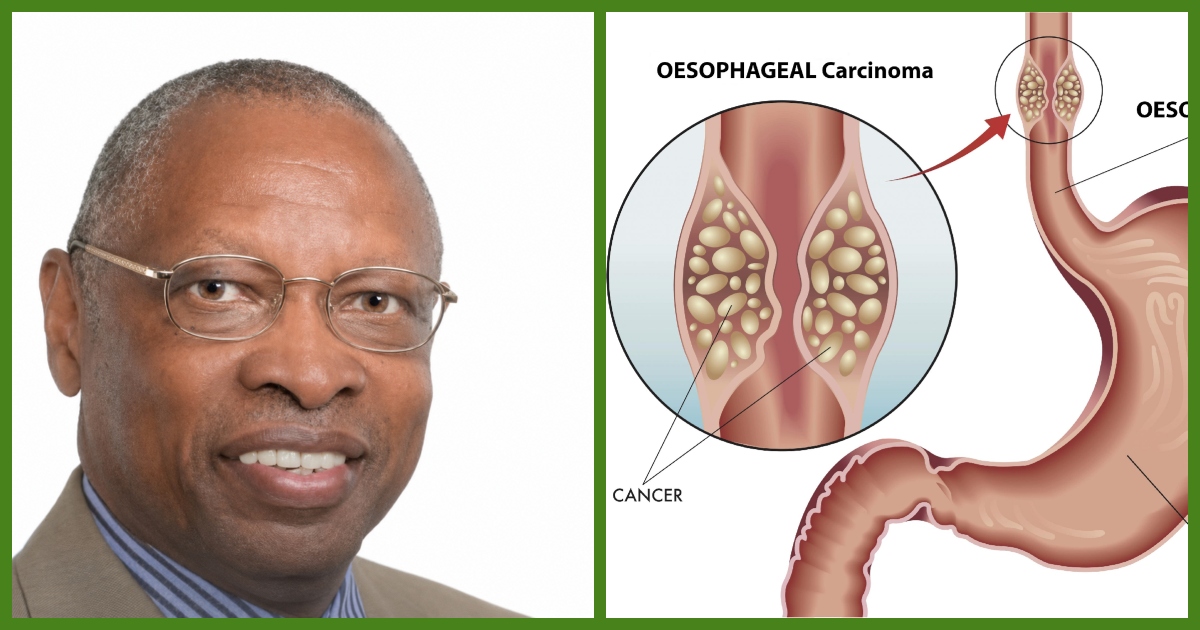
A Kenyan cancer researcher, Professor George Njoroge, has won a major international grant worth approximately KSh 446 million, alongside a UK-based scientist, in a breakthrough project aimed at transforming how oesophageal cancer is detected and treated in Kenya.
Njoroge, a leading oncology expert and former chief scientific officer at Kenyatta University Teaching, Referral and Research Hospital (KUTRRH), will co‑lead the initiative with Professor Robert (Robbie) Bristow of the University of Manchester, with the project funded by the UK’s National Institute for Health Research (NIHR).
Oesophageal cancer
Oesophageal squamous cell carcinoma, a type of gullet cancer, is the third‑most common cancer in Kenya and accounts for about 99 per cent of affected patients dying within five years, largely because most cases are diagnosed at advanced stages.
The new partnership seeks to reverse this grim trend by shifting diagnosis from stage 3 or 4 to stages 1 or 2, when treatment is more likely to succeed.
The project will deploy mobile‑endoscopy units to bring life‑saving screening closer to rural and underserved communities, while also training local clinicians in advanced endoscopic techniques and molecular pathology.
Read Also: Kipngetich Rutto: From Kenyan Farm to American Bat Mastery
Central to the work is a strong focus on early detection. Using molecular profiling and risk‑stratification tools developed in Manchester, the team will identify individuals at high risk of oesophageal cancer and fast‑track them for screening and early intervention.
The project also aims to strengthen Kenya’s research infrastructure, integrating these new methods into the national health system so that they become routine rather than one‑off experiments.
The collaboration is already being hailed as a model of true North–South partnership, with both Kenyan and UK researchers sharing leadership, data, and decision‑making.
For Professor Njoroge, the award represents a significant milestone in years of work to build local capacity in cancer research and care.
For cancer patients across Kenya, it offers a more hopeful future, one in which a deadly disease can be caught early, treated effectively, and ultimately brought under control.