


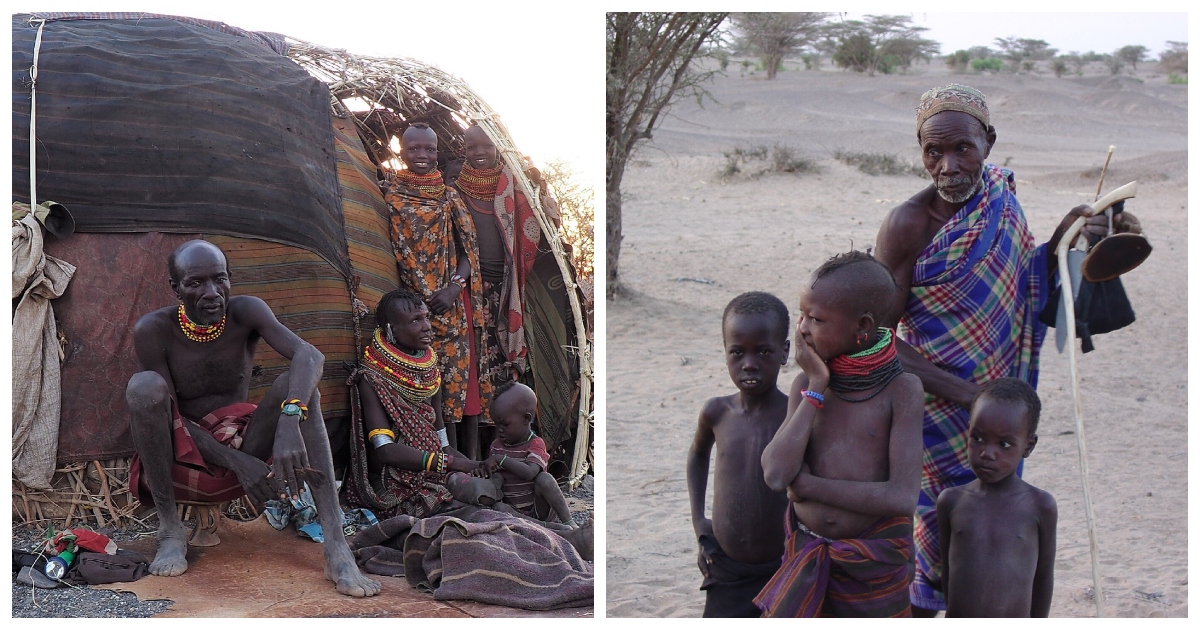
In the scorching, bone-dry expanse of northern Kenya’s Turkana Basin, where temperatures soar past 40°C and water sources vanish for months, the Turkana people have defied biology for millennia.
A groundbreaking genetic study reveals that they carry a rare mutation, allowing them to survive on as little as 1.5 liters of water per day—less than a third of what most humans need—without experiencing kidney failure or dehydration.
Pastoralist nomads herding cattle, camels, and goats across this unforgiving desert, Turkana rely on a brutal diet: 70-80% animal products like blood, milk, and meat, high in protein but taxing on the kidneys.
Yet, unlike outsiders attempting the same, they show remarkably low rates of chronic kidney disease.
The secret lies in a variant of the STC1 gene, active in the kidneys, which turbocharges water retention by producing hyper-concentrated urine and efficiently clears metabolic waste.
Researchers from Cornell University, UC Berkeley, Kenya Medical Research Institute (KEMRI), and Turkana communities sequenced genomes from 367 individuals, scanning nearly 7 million genetic variants.
Their findings, published in Science last September, pinpoint eight DNA regions under intense recent selection, with STC1 emerging around 5,000 years ago—coinciding with the region’s shift to hyper-aridity.
Read Also: Ambia App Weaves Heartwarming Connections for Kenyans in the Gulf with Loved Ones Back Home
Turkana women trek 5-10 km daily under blazing sun, hauling jerry cans while dehydrated, yet they endure.
“Our ancestors taught us the desert gives what it takes,” says local elder Ekiru Loi, a study participant.
This community-led Turkana Health and Genomics Project marks a milestone in African genomics, blending indigenous knowledge with cutting-edge science.
“Understanding these adaptations will guide health programs for the Turkana — especially as some shift from traditional pastoralism to city life,” said Charles Miano, one of the study’s co-authors and a graduate student at KEMRI in Nairobi.
“It can help doctors anticipate health risks, like kidney strain or metabolic diseases, and design better prevention strategies.”
Climate Change
As climate change intensifies droughts across East Africa, the Turkana’s adaptation offers vital clues for human resilience.
However, urbanization lures youth to cities, diluting these traits through intermarriage and modern diets.
Scientists warn: preserving this genetic heritage requires balancing tradition with progress.
For Kenya’s Turkana, evolution’s gift ensures they remain the desert’s ultimate survivors.