


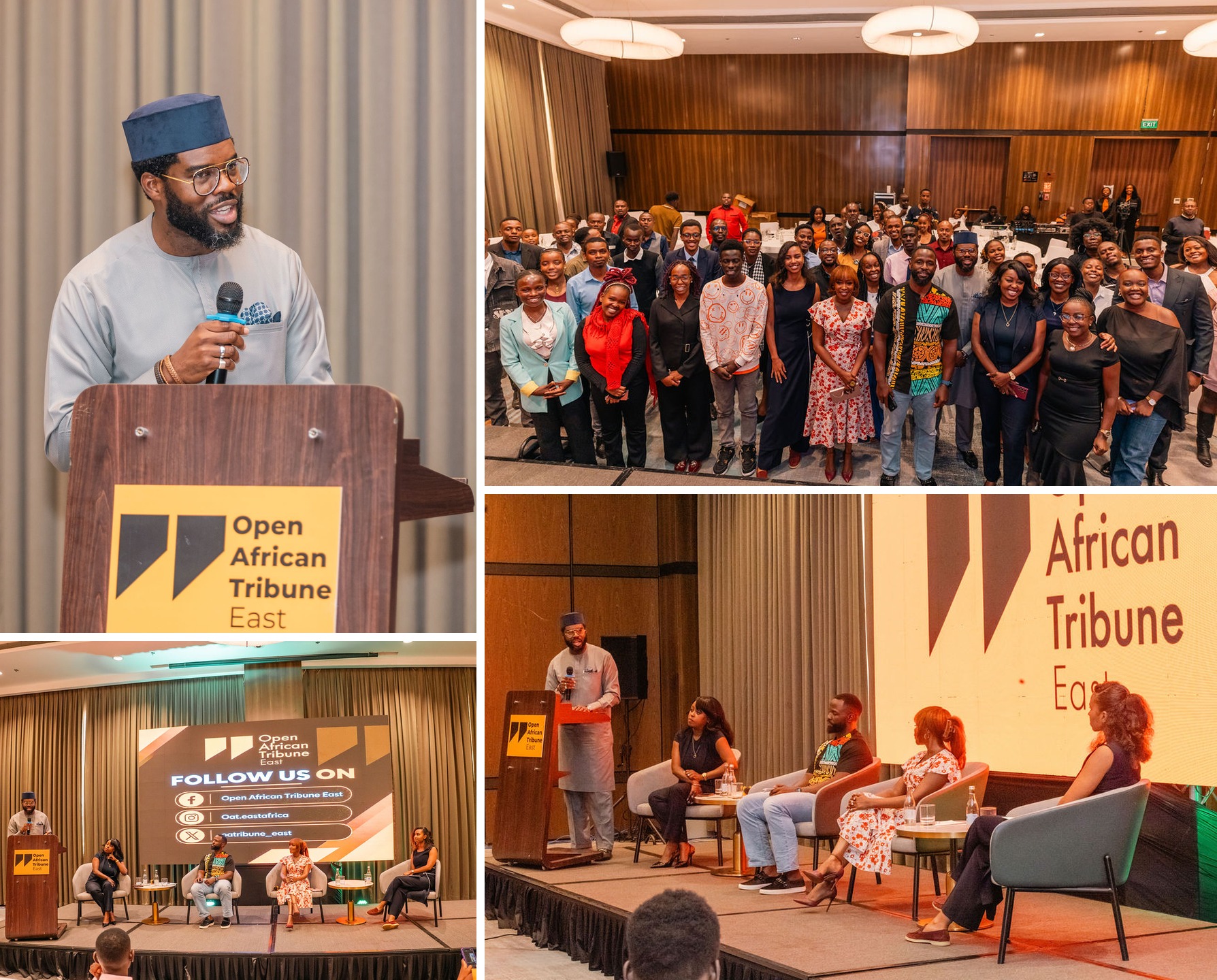
African journalists have been urged to put accuracy, independence and accountability above speed and sensationalism as they work to rebuild public trust and tell the continent’s stories from authentic African perspectives.
The call came during the inaugural Open African Tribune–East Media Forum held in Nairobi, where journalists, editors and media stakeholders examined the challenges and opportunities shaping the future of journalism in East Africa.
A platform for East Africa’s media future
The forum took place at the Hyatt Regency in Nairobi’s Westlands on 29 October 2026 under the theme “Connecting Journalists to Shape Africa’s Story.” It brought together members of the regional media community to discuss how news is produced, distributed and consumed, and what journalists and media organisations must do to remain credible, relevant and sustainable.
The leadership panel, themed “The Future of Journalism in East Africa,” explored the tension between commercial sustainability and editorial independence, the growing use of artificial intelligence in newsrooms, declining public trust, threats to media freedom, and the skills young journalists need in a changing industry.
Participants also emphasised the importance of reporting East African and African stories through perspectives rooted in the continent.
Accuracy over being first
Panellists warned that the pressure to publish first, attract clicks and generate online engagement is weakening journalism’s core purpose. They argued that verification, hard questions and public-interest reporting must take priority over viral headlines.
Investigative journalist John Allan Namu said newsrooms must invest in getting stories right rather than rushing to be first. He also called on journalists to challenge unethical conduct within the industry.
“We need to think about the investment in terms of how much we care about getting things correct as opposed to being right or first because a certain platform has not done so. We need to be better at calling out bad behaviour within our industry,” Namu said.
Media personality Terryanne Chebet described the trust deficit as a global challenge rather than a Kenyan problem. She said both the media and leaders face declining public confidence, and that journalists must continue demonstrating professionalism through their work.
Chebet cautioned that self-censorship could strip journalism of its purpose. She also urged reporters to interrogate headlines and look beyond surface-level narratives instead of producing shallow or lazy content.
“It’s not an easy thing to do. We have to keep pushing. If we over-censor ourselves, we lose what our purpose is as journalists,” she said.
The business of fact, not fake news
Television presenter Lilian Muli reinforced the panel’s message, saying journalism should not be driven by drama, rage-bait or emotionally manipulative headlines.
“It’s not always about breaking the story first; it’s all about the story being factual. It’s about asking the hard questions; it’s about verifying your sources,” Muli said.
She urged journalists to change their attitudes toward sensationalism and remember that their responsibility is to inform the public with facts.
“As journalists, when you rage-bait, and rush to have headlines that have emotion, when your headline is completely sensational, we are losing the plot. As journalists, remember, we are in the business of fact, not fake news,” she said.
Rebuilding trust in the AI era
The forum’s discussions reflected wider concerns across African media about artificial intelligence, misinformation and audience confidence. While AI can support research, translation, transcription, verification and data analysis, it can also accelerate false narratives through fabricated images, cloned voices and impersonation.
Panellists and workshop participants agreed that newsrooms must adopt clear policies on transparency, accountability, source protection and editorial oversight. They stressed that technology should support journalism, not replace the human judgement required to verify information and serve the public interest.
For African journalists, the challenge is to use new tools without surrendering editorial control. Human oversight remains essential, especially when reporting on sensitive issues, conflict, politics and public health.
African Journalists Telling Africa’s story authentically
Open African Tribune Editor-in-Chief Naakuu Paul Birabi said the organisation’s continental approach is driven by the need to tell stories that reflect shared experiences and realities across African countries.
“Our intention is to be able to create a narrative that is authentic to the continent. Regardless of where we come from, our stories are similar; our youth are also in a similar place, socially and economically, and their understanding of geopolitical issues is also the same across the board, which is why we take a continent approach to our storytelling,” Birabi said.
“For us, OAT, we are substance over style.”
— Naakuu Paul Birabi, Editor-in-Chief, Open African Tribune
He said Open African Tribune launched in 2025, began operations in Nigeria and later expanded to East Africa, a region the organisation considers important to understanding the continent’s wider political, social and economic developments.
Birabi described the publication’s editorial philosophy as “substance over style,” encouraging audiences to engage deeply with stories rather than consume them superficially.
“For us, OAT, we are substance over style; we like to encourage people to sit back and consume our story in a meditative fashion,” he said.
Building future-ready newsrooms
The forum also featured a morning workshop, “The Modern Journalist: Building Credible and Future-Ready Newsrooms,” which examined newsroom innovation, public trust, responsible use of artificial intelligence, fact-checking and the fight against misinformation.
The wider programme gave journalists and editors space to exchange experiences and consider practical ways to strengthen collaboration across the region. Discussions reinforced the need for media organisations to invest in verification, ethical reporting, mentorship and new approaches to sustainability without compromising editorial independence.
Participants also highlighted the importance of helping audiences develop stronger habits around evaluating and verifying the information they consume.
Read Also: Former SpaceX Welder Juan Hernandez Becomes Millionaire After Historic IPO
What the forum means for East African media
The Nairobi forum highlighted a growing recognition that journalism’s future will depend not only on new technology, but on the credibility of the people and institutions producing the news.
As audiences encounter more information from social media platforms, influencers and automated systems, journalists must make their standards visible by showing how stories are verified, correcting errors openly and explaining editorial decisions.
For East African media houses, the challenge is to turn these principles into practice. That means funding investigative reporting, protecting journalists from political and commercial pressure, improving pay and working conditions, and creating newsroom cultures where questioning power is encouraged rather than punished.
The forum also pointed to the need for media literacy beyond the newsroom. Audiences must be equipped to question sources, identify manipulated content and distinguish verified reporting from speculation or propaganda.
A call to action
The forum’s message was clear: African journalists cannot rebuild public trust by simply asking audiences to believe them. They must earn that trust through consistent accuracy, transparency, courage and reporting that speaks to the realities of African communities.
Open African Tribune–East said the forum forms part of its commitment to building connections among journalists and supporting journalism that is credible, independent and reflective of African experiences.
The organisation intends to continue engaging media practitioners and stakeholders on issues affecting the region’s newsrooms and the future of the profession.
If African journalism is to shape the continent’s story, it must remain grounded in facts, accountable to the public and confident in its own voice.