


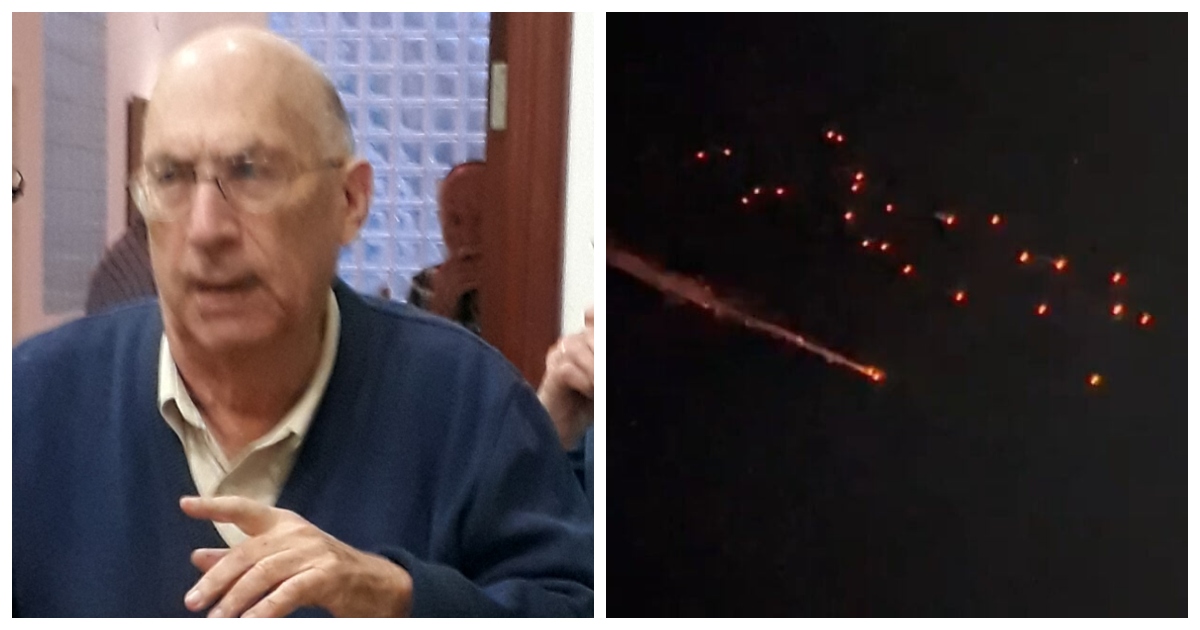
JERUSALEM — Israel’s missile defenses face a dire new challenge from Iran’s ballistic missiles armed with cluster warheads, according to Dr. Uzi Rubin, the architect of the nation’s premier anti-missile systems.
“After the cluster has opened, it’s too late,” the renowned expert declared in a stark analysis published by The Jerusalem Post.
Rubin, who founded Israel’s Missile Defense Organization and led development of the Arrow interceptor from 1991 to 1999, explained that these warheads unleash dozens of bomblets mid-air, transforming a single target into an overwhelming swarm.
These sophisticated munitions, spotted on Iran’s Khorramshahr-4 missiles, deploy 20 to 80 submunitions—each packing roughly 2.5 kg of explosives—at altitudes around 7 kilometers.
The bomblets scatter across 8 to 16 square kilometers, saturating defenses and threatening troops, airports, and unprotected civilian zones.
Unlike conventional 500 kg unitary warheads that deliver focused devastation, clusters prioritize wide-area chaos, leaving hazardous duds that endanger post-strike recovery efforts.
Israel’s layered defenses, including Arrow for high-altitude ballistic threats and Iron Dome for shorter-range rockets, must strike before dispersal.
Read Also: Ambia App Weaves Heartwarming Connections for Kenyans in the Gulf with Loved Ones Back Home
Post-release, interception rates plummet as systems struggle against tiny, numerous projectiles.
Rubin emphasized the importance of high-altitude engagements, noting that Iron Dome isn’t designed for this role.
First Test
Iran first tested these weapons in June 2025 strikes, escalating their use in 2026 barrages targeting Tel Aviv and Ben Gurion Airport.
Reports indicate up to half of recent missiles carried clusters, often in tandem with Houthi launches, aiming to overload Israel’s shields.
Videos and eyewitness accounts depict bomb blasts causing blackouts and widespread disruption, with the IDF confirming multiple impacts.
The shift doesn’t rewrite interception doctrine but amplifies risks in an already tense conflict.
“These are game-changers for saturation attacks,” Rubin cautioned, urging preemptive high-altitude intercepts.
As Tehran refines its arsenal amid U.S. President Donald Trump’s reelection, Israeli strategists brace for intensified barrages.
Unexploded clusters pose lingering threats, echoing global concerns over these controversial munitions banned by many nations under the 2008 Convention on Cluster Munitions—though neither Israel nor Iran is a signatory.